Blog

  • What Will Be Your Legacy?

    What Will Be Your Legacy?

    I get a lot of slack for being too serious or not having enough fun. I readily admit that I have a stick up my butt the size of full grown oak tree but there are several reasons for that. One reason I can be such a prude is, legacy.

    We are all leaving behind a legacy that was never possible before. With the advent of the Internet, we are now leaving a trail that will forever follow us, even after we’re gone. In 2,000 years your bones will be dust but that image of you drinking a beer will live on. And is that how you want to be remembered? Is that the legacy you want to leave here on earth?

    “Here lies John Doe. He liked arguing with people on screens. He spent most of his life looking at his phone. His preferred attire were shorts since he enjoyed exposing his legs for the world to see.”

    Or,

    “Here lies Jane Doe. She liked complaining about everything, talking about what she’d like to do and never actually doing it.”

    Life is so short, so fast that, as soon as your born, your’e just counting down the days till your death. I don’t mean to come off as a nihilist, but just honest about the limited time we have on this earth and what we can accomplish in that short time. My truth is, we live on this earth for a short time to prove we are worthy to live in the next life for an eternity, but that’s another story for another day. What we are talking about here is, what we are leaving behind, on this earth, once we’re gone.

    Before, humankind didn’t need to worry too much about this. Either you were a king or a pauper and the former would live in the eternal hall of fame that we call history. But not so anymore. Now, everyone, from the leaders of the world to those that clean their toilets will have some type of legacy left behind, a record, that shows what that person did with their lives, forever.

    Given that we now have this huge, daunting, pressure of legacy that is now on all of us, you would think that mankind would do a better job of reaching for their goals, but sadly, we are not.

    I think that it will take about a century or two for people to appreciate the legacies that we are now leaving behind. In a few decades we will all be dead. And at these funerals will be scenes of us holding beer bongs and wearing fake mustaches at weddings. Maybe there will even be a 15-minute slide show to showcase all the food and drinks you consumed that you thought were so important to share.

    That’s the legacy we are leaving.

    What about children? Yes, that’s how we pass on our genetic legacy but it has nothing to do with what we have actually done. If your proudest moment of accomplishment comes from the fact that you got drunk and horny and forgot the condoms a few times, I’m sorry, but that’s not really climbing Mount Everest.

    And while your genes may live on in your children and their children’s children and so on, your memory will be all but forgotten to everyone who knew you since they will all be dead too. All your future decedents will search up who their great-great-grandparent was and see someone who enjoyed taking pictures of their feet while on vacation.

    There is so much more to you than that, to all of us. It’s scary, I know, but we have to try. Even if you don’t succeed in reaching your dreams, at least you will be better remembered as someone who tried than someone who just went through life, coasting on whatever path was made for you.

    That’s why, for me, my writing has become so important.

    For the last two to three years I have rarely gone out. Few parties and nightclubs. I mean, sure, I have gone to them and will continue to go to them, but I’m there for a half hour, tops. It feels like such an empty waste of time. I have spent the last few years writing a novel, particularly, on weekends when I have more time. While it might seem crazy to be “working” on the weekends, it’s actually been fun…for the most part. Trust me, there have been more days of me doubting myself and wanting to stop than those few, special days when I feel “flow” and the words just come out and I feel like a complete human being. Fleeting, but worth it.

    My book might sell five copies. I am terrified that it will be horrible, something that my friends and family can throw in my face for the rest of my life. “You worked on this garbage? You do have a legacy all right Tony. It’s called crap.”

    But that’s just my inner-critic, my Daily Dragon, doing what it does best. I may not leave a legacy of great work or art, even though that is my dream. My legacy might very well just be that I tried. But that’s good enough for me. More than most can say.

    I tried.

  • We’ve Been Wrong The Whole Time

    Handi-Man-Living-Color-Wayans-h1

    This week, the National Hemophilia Foundation is having their annual meeting in Dallas Texas. This wonderful meeting is America’s premier bleeding disorder yearly reunion. And it got me thinking about two themes that I have been told nearly all my life as a person living with hemophilia. Those two things are, one, that people with hemophilia are not handicapped or disabled and that, two, people with hemophilia are an inspiration to others. Both are, mostly, false. I say mostly because, the advancements in hemophilia have left the younger generation free from major joint damage. But besides that, many of us are disabled and handicap and all of us are no one to look up to.

    Looking at the first distinction, the handicapped or disabled label, people are quick to say that we are not. While we can all agree that being disabled or handicapped is not a goal or something anyone should aspire to, for those of us that do have mobility issues, we should not feel shamed or feel less than the next person just because we have mobility issues.

    It took me a long time to realize that and I still fall into the trap every once in a while. It took me forever to get a handicap license plate. Why? Because I was too proud. Because being disabled was “bad.” Well, I am handicapped. I am disabled. I am a cripple. And you know what? There’s absolutely nothing wrong with it. It just is what it is.

    On the other side, the bleeding disorder community also promotes a culture of victim hood, as if our pains and troubles make us someone to look up to. It’s a funny balance to hear too since, while people are trying to pass the first belief (you’re not handicapped / disabled) they also try to juggle the second which is, that we’re some type of heroes for what we are dealing with. Which of course, according to view one, is nothing.

    These two beliefs have been propagated to our community from a place of well meaning. It makes people disabled with hemophilia deny their disability (making one not feel bad) while making us out as role models (so we can feel good about ourselves). While they mean well they, to me, do more harm then good.

    It makes a person with hemophilia feel proud of having a bleeding disorder and there is no greater wrong on earth than pride.

    This “you’re not disabled / you’re a hero” is actually creating people who are disabled and anti-heroes ironically enough by living a sedentary life without any goals. After all, why should anyone aspire to anything if they’re already perfect? Not only is nothing wrong with you, you’re also someone people should look up to.

    I hear people trying to balance these two views with a myriad of excuses. It’s a delicate balancing act of bull feces that has been ingrained into our heads.

    So what are we then?

    For some they are disabled. For others, they are not. Regardless if you are or aren’t, that doesn’t make you bad. It just makes you either disabled or not. No biggie.

    So then are we heroes? Heck to the no. First responders like police, fire, and paramedics, those people are heroes. People in the military, those people are heroes. We’re just people who walk funny and have owies.

    I guess what I’m trying to say is, at the end, we are all the same. People who are physically more healthy than me can be more unhealthy in their emotional, financial, spiritual, or emotional health than me. The old saying that we all have our cross to bear is true. Just because someone might be at a disadvantage to the eyes, doesn’t mean that that person’s life isn’t easier than the so called “healthy one.”

    When people mope and complain about their physical ills, they’re more times than not just looking for sympathy. Since everyone is battling their own demons of equal weight this person does get the empathy they want all though not in the form they want it. It comes off as pathetic.

    So to all my blood brothers and sisters out there reading this, quit feeling bad for yourself and, more importantly, stop feeling proud of yourself. You haven’t done anything yet. And that’s a good thing.

    That means that we still have a lot more to do with our lives.

    That means there is so much more to life than just having hemophilia.

    That means that we accept that we have our setback, sure, but so does everyone else. And that setback is nothing to be ashamed of.

    That means that maybe one day we will be someone that people look up to through our own work, not to what just happened to happen to us.

  • Our Collective Suicide

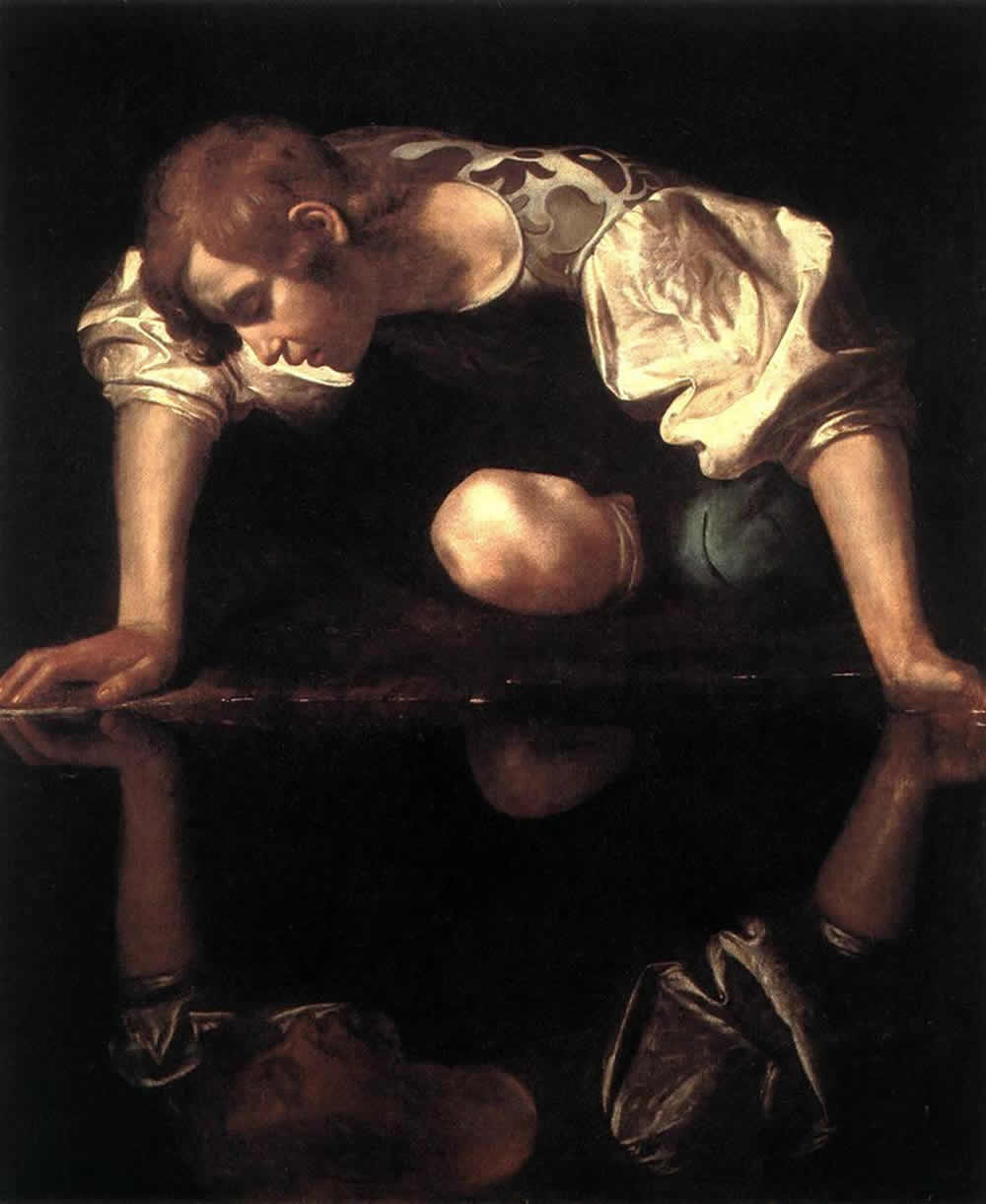
    Narcissus (Caravaggio)
    Narcissus (Caravaggio)

    According to the Ovid, Narcissus was a young hunter who put himself first before everyone else. Enamored with himself and him alone, Narcissus led a vain life filled with doing nothing but loving himself and only doing what he wanted first.

    Then one day Echo saw him and fell in love. Echo started following Narcissus. She loved him so much, she would even repeat everything he said. When Narcissus learned of Echo, he chastised her. He didn’t want anyone to bother him and interrupt him from loving himself. Heartbroken, Echo ran away, forever hiding in the small holes of caves.

    Nemesis was furious when she found out about this. Nemesis was the spirit who would humble those who affronted the gods.

    Nemesis decided to have Narcissus look at a pond. The pond was as smooth as glass and that’s when Narcissus saw himself for the first time. He didn’t know that he was looking at himself, he just thought he saw something beautiful. Realizing that he could never see anything more beautiful, he drowned himself.

    And that’s what we are doing to ourselves. We are slowly killing ourselves one selfie at a time. We may be physically alive but our souls are dead.

    Our vanity is making us love ourselves so much that we are now destroying our relationships with others. We would rather love the false idea of ourselves than creating new connections. We are so self centered and self involved, we are now pushing away those that would better us.

    Water gives life. It can also destroy. Our smart phones can help us get to a gas station, but they can also make us yearn for approval.

    Narcissus had water. We have technology. At the end, our admiration of that same reflection will be the demise of many.

  • Puppy Wars

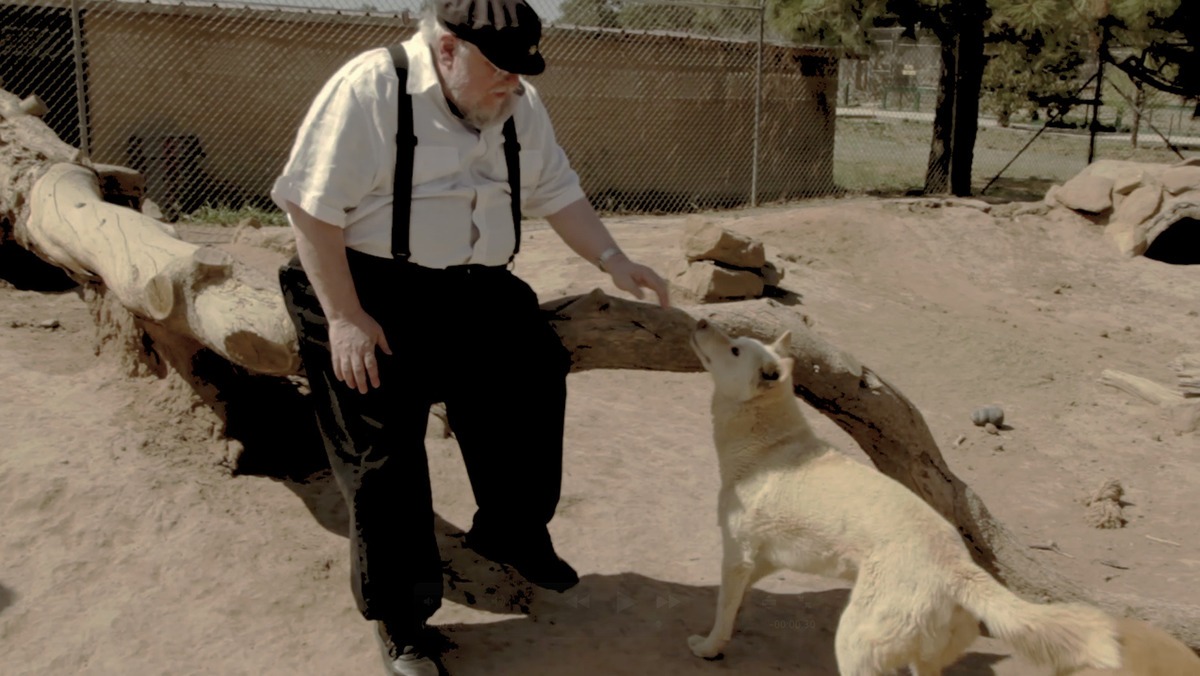
    George-Martin-Wolf

    In the publishing and literary world, there always seems to be some sort of scandal and today is no different. Right now, the biggest talk around town has to do with what some call Puppygate or the Puppy Wars. Whatever you call it, it is a fascinating war of words.

    This post will try to do something that others have not, try not to take a side but mainly catch people up as to what the heck is going on.

    First, some background.

    All this talk of puppies and infighting has to do with the Hugo Awards. The Hugo is an award for Science Fiction and Fantasy (SF&F) given to the previous year’s work. There are various versions of this award ranging from novels to short stories to art. It is one of the most prestigious awards in literature and the fight as to what is and isn’t SF&F is at the core of this very hostile debate.

    Voting for the Hugo is a somewhat public affair as all that is needed is a forty dollar membership to World Science Fiction Society. Once you have that, you have a vote.

    Okay, so you get that there’s this award for writing and that there’s voting involved with the public. What the heck does this have to do with cute little puppies and the guy who wrote Game of Thrones?

    Everything really.

    You see, for the last several years, the Hugo has been going to, what the Sad Puppies feel are, left leaning writers and writings.

    I know, I need to stop again. What is a Sad Puppy? Well, that’s the self given name of the grass roots group who is trying to shakeup the current system and succeeding. Sad Puppies is a slight towards liberals and their fondness for animals. The original name was Sad Puppies Think of the Children and there’s even another group called Rabid Puppies. For the sake of clarity and brevity we’ll just call the two main factions the Sad Puppies versus the Blue Team.

    (By the way, coming up for a name for those on the other side of the Sad Puppies debate was a task unto itself because, as you’ll see, one of the biggest problems with this debate is the name calling. I’ll go for Blue Team since in fake battle simulations there is usually a Blue Team and a Red Team, and since both sides don’t argue that the non-Sad Puppies are more liberal in their views, I’m going with the Americancentric color of blue for them.)

    Okay, so where were we? Ah, yes, puppies, and more acurately, sad ones.

    So the Sad Puppies feel that the Hugo Award has been given to, not the best writng in SF&F, but to those that are pushing a social agenda. On the other side, the Blue Team, they claim that they are just moving the genre forward and giving it to the best writing as well.

    So who’s in the right? Depends on who you ask and what side you’re on. Let’s go over the pros and cons of each side, first starting with, what I call, Blue Team.

    Blue Team is the current clique of writers, editors and publishers that have had significant say into who wins and doesn’t win the Hugo. Blue Team’s cause is just, they believe, because before they took over the mantle, SF&F was awarded to low-brow writing and writers. The SF&F landscape was awash with straight white men and their views of what SF&F is.

    Since the Hugo has now been in their care, they have given it to a more diverse crowd who is pushing, changing, and challenging what is commonly believed to be the norms of SF&F.

    On the other side we have the Sad Puppies. They feel that the world of SF&F has become too academic and trying to push across social agendas instead of doing what the Hugo was meant for; to award the best writing. They feel that they are the Rebellion trying to take on the mighty Empire and bring justice back to the galaxy and the Force.

    But even that isn’t a good analogy since Blue Team feels they’re the Rebels who knocked down the Dark Side and are only trying to stop it from coming back. With me so far?

    So that’s how both sides see themselves. They both think that their cause is good. But before we get into the cons of each group, let’s go back again to the culture and world that made this infighting possible.

    No one on either side will deny that there hasn’t always been some sort of politicking and cliques that have pushed their agendas and writings for the Hugo. It has been going on for a long time and, as we can see with the Puppy Wars, is still continuing. The only difference from days past to now is the Internet. What was once whisper campaigns has now bled out into the public forum that is the World Wide Web.

    One of the larger problems I see here is, the name calling and both sides are guilty of it.

    If you’re a supporter of the Sad Puppies, there are tons of examples of acronym name calling that I won’t even get into. But even their stance is insulting to the Blue Team. The Sad Puppies paint themselves as rebels fighting for a just cause. That in itself is implying that Blue Team is just a bunch of status quo pushers.

    If you’re a supporter of the Blue Team, the name calling has been fierce there too. Everything from homophobic to racist has been thrown at those who are trying to disrupt the system.

    So what does this have to do with Game of Thrones guy? A lot since he has publicly come out, time and again, in support of Blue Team.

    So that’s Puppy Wars in a nutshell.

    What do I think about it? Well, I think that this has been going on for years, with control going from the Sad Puppies (historically) to now Blue Team who are afraid of losing what they thought was theirs.

    I understand both side’s arguments and see validity in both their cases. At the end, however, this is about narrative control and more importantly, what is art.

    And that’s what’s so strange to me. You can’t define art. Maybe that’s the only real definition of art, it’s undefinable.

    The main problem with the Hugo Awards is the way it’s designed. It is done in a well meaning spirit, open to fans of the genre and gives them the right to vote. The problem is, it has become too political. There are now cliques and parties that smear and slander just so they could win.

    What needs to be done? I’m not sure but all this infighting needs to stop. So far the only thing that has been resolved by the two sides is that the Hugo’s importance and validity has come into question. And that is something neither side wants.

  • Ghostwriting

    ghostwriter-cartoon

    In the near future, there will be a scandal in literature, I predict. I’m not sure if that’s in fifty years or in two hundred, but I feel it will happen one day. So far, I have zero proof that it is happening on a major scale but I do think it is happening now as we speak.

    What is this conspiracy theory that has me wearing tinfoil on my head? Ghostwriting, and to be more exact, that major, blockbuster writers are actually frauds.

    First, what is a ghostwriter?

    As the name implies, it’s a phantom force that does the writing for someone. No, not a literal ghost that floats in a white sheet but someone else who writes for you.

    Ghostwriting has been around for a long time. And as long as it’s out in the open, I see nothing wrong with ghost writing, as long as the reader is made aware.

    Most biographies are co-written, meaning they were ghost written by another author. I’m sorry, but that reality star from Jersey Shore probably really didn’t sit down and write down their autobiography and was, more likely, just a recorded interview that was then later written by a ghostwriter. Sorry to break your heart.

    But as I stated earlier, as long as the ghostwriter is acknowledged, usually following the non-writer’s name with a “with” I think there is nothing wrong with that. What I am suggesting is something more sinister. I’m suggesting that full on authors are not writing their books and are not who they claim to be.

    I first came across ghost writing as a Tom Clancy fan. He had a new book out, Op-Center, and I couldn’t wait to get my teeth into it. After the first chapter or so, the book felt weird. It just didn’t seem like Mr. Clancy. It was as if his writing was…off.

    I then see that it was co-written with another gentleman and upon reading the notes, it became clear the Mr. Clancy was more of an adviser than a writer on the project. I felt had at the time, but in retrospect, Mr. Clancy did nothing wrong. The co-author was right there, on the front of the book. Clancy fans would later dub these “asterisk books” since they weren’t really written entirely by Tom Clancy. And that’s fine. I think its great for an author to brand him or herself and become their own little empire. If a director can produce poor sequels and have the money come in by not doing any of the actual work, why can’t a writer?

    However, later on I saw that Glenn Beck had written a book of fiction. This had me floored. How could a man, with a radio and television show be able to write a bestselling book? I looked right there, right on the cover, and Mr. Beck’s name and his alone was on the cover. My spidey-sense tingled that something wasn’t right.

    As I did a little bit of research I found out, yet again, that there was no secret. Mr. Beck openly talked about that he didn’t actually physically write the books but they were written for him, based on his ideas. He even credits them inside the acknowledgments.

    So I was wrong to assume that Glenn Beck was a phony, trying to pass himself off as a fiction writer. But that still got my wheels turning.

    Doing an Internet search, however, one does come across plenty of ghostwriters who make small fortunes deceiving readers. These writers, write some of the bestselling stuff out there and have someone else’s name on the cover. This is what I’m talking about. And this is what bothers me.

    As for the actual ghostwriter, I don’t feel that they are to blame. I completely understand creating something, getting a check, and then passing along the glory to someone else, someone more marketable. But the real villain is the person acting like they wrote the book.

    No one has been outed, yet, but it’s just a matter of time before they are.

    Sure the faux-writer has made the ghostwriter sign a million pieces of paper that he or she can’t disclose the fraud. It may even last a hundred years until everyone who is involved is outed. By then the ghostwriter and phony writer would be dead is dead. But what then? What happens when the years past and the truth comes out? Why aren’t these fake writers afraid of that?

    Think about your favorite author (if it’s me, thanks for reading mom) and now imagine that you found out that he or she is a complete fraud, that they had someone else do the work for them. How would you feel? Deceived? Angry? All of thee above?

    And that’s what I just don’t get. Why do it if you’re gonna get caught? And trust me, you will get caught. Maybe not now, but eventually you will.

    Don’t worry. I don’t think it’s any one of the major writers like JK Rowling or Stephen King. These guys have written extensively about their writing habit. But I do see that some more, less famous writers will be made out.

    And that’s what stuns me. When you and I are dead, do you want the world to look back on you as a fraud? I mean, sure, during your lifetime you had the fortune and honors of being a writer but what then? What about your legacy? All the work you may have done, either big or small, will be tossed to the trash bin of history, just another fake who wanted fame and fortune in their lifetime.

    So that’s my fear. One day these writer’s will be found out. The public will cry out (as well they should) and then it will make all writers suspect. And that’s what burns me the most. Here I am, year four, five, or six, (I’m not sure) of slaving away and learning the craft and then some bozo is gonna through me and everyone else who worked hard into a shadow of doubt.

    I guess the only solace that any writer and reader can have is that these people will be outed one day and with it, their legacy shamed. And there’s nothing worse than that, in this lifetime at least.

  • I Am Not a Nice Person

    3310957_ebd0b052


    I am about to do something that is not nice. It’s not mean, but it’s not nice either. What is this thing I am about to do that isn’t nice? I’m about to tell you something nice I did. Let me explain.

    As many of you know, many of my friends are Jewish. One of my first Jewish friends, Michael Rosenthal, taught me a very prolific thing in Jewish culture, the mitzvah. A mitzvah is good deed, basically. Once, while we were at a summer camp, I noticed that a building was paid for by an anonymous donor. I pointed out how foolish this was to Mike and he told me that one of the biggest mitzvahs is giving your money without the recognition most attache to it. That lesson has stayed with me all my life.

    I guess it all goes back to the thinking that, if you do something nice so people can see and say you did something nice, then you didn’t do something nice at all, and I agree.

    So that is why I am about to do something that isn’t nice. That’s why I am about tell you about something I did that was nice.

    After nearly two months, my blinds came in. The guy who installed them is named Jim. Jim is an amazing person with a huge heart. He told the story about how he lost his only daughter to liver cancer. He has only one grandchild, Wyatt, that she left behind. Touched by this story and just at how nice Jim was, I decided to buy us both lunch. He happily agreed.

    As I went to the Thai place to pick up my food, I noticed that my debit card was missing. I panicked briefly then remembered where I thought I had left it. I went back inside my building, explained to Jim what happened, and asked him if I could borrow twenty bucks. Lunch was still on me, but let me borrow the twenty spot and I would get my debit card and his twenty back. He agreed.

    After lunch I went to the store where I left my card. I had to send a fax to work and left it inside the automated fax machine. As I walked out of the business center, it was fortunately right next to my bank so I would avoid those troublesome ATM fees from other competing banks.

    As I walked down the street, back to my place, I was going over the thought of giving money and not telling people. This lunch that I was buying Jim would be between God, him, and me. If I tell anyone else, it wouldn’t be a nice act, it would just me doing something to get attention and praise, the complete opposite of something nice.

    As I walked back, a timid man began walking next to me. He asked if I had any money. I didn’t want to lie so I just told him that I was sorry.

    The homeless man smiled and said thank you and continued to walk next to me. He commented on how hot the weather was becoming. I could just tell he was a pleasant guy looking for a quick chat so I started asking him about his day and how he was doing. He told me the shelters are full and there isn’t any space for him. He also told me that it was a good thing since he didn’t want to be around that. He told me how he had had food poisoning and was finally feeling better. I think that’s when it hit me. Even a starving man could get food poisoning. With that, I told him the truth. I told him I did have twenty dollars and for him to have it. He left me with God’s blessing and I went over to another ATM. I still had to get Jim his twenty dollars.

    After I was hit with the three dollar surcharge on my next twenty, I was nearly home. All these thoughts of doing nice things for others were swimming in my mind, first Jim and then the homeless guy. I began to tell myself how great I was and how much better I was than some of my other friends. Some of them don’t give money to homeless people, something I think is horrible.

    Just as I was telling myself how wonderful I was, I saw her eyes. It was another homeless person, this time a lady. As we got closer and closer her eyes didn’t let go.

    “Excuse me sir. Do you any change to spare?”

    “No, I’m sorry. I don’t have any money on me.” I said, lying.

    My inner dialogue was telling myself I can’t give forty bucks, forty-three if you count the surcharge, to two homeless people in under five minutes! I’m not made of money! I mean, my kindness only goes so far!

    And soon enough, I was home handing Jim a twenty and not feeling too good about myself.

    So what’s the moral of the story? It’s not to make you feel sympathy for me, that’s for sure. Is it a happy ending since I did a little good or a sad ending because I’m a hypocrite for not giving that lady money while I was judging my friends’ past actions?

    I learned a lot of lessons inside those fifteen minutes. I learned that I was wrong to think I was better than my friends for giving to the homeless. I learned there is only so much we can do, no matter how well our intentions are. I learned I was taking away the nice thing I had done when I decided to share this with you.

  • I Turned Pro

    Saint Philip Neri

    This is an open letter to two people. Author Steven Pressfield and, more importantly, to myself.

    I turned pro.

    Those three words, not I love you, have been the hardest to say. Honestly, I thought they’d never come. Mister Pressfield always talks about how you will know the moment you turn pro. It hits you. I never believed him, until today, until a few moments ago.

    I have been a dilettante on a lot of things, and in particular, my writing. I have finally finished a rough draft but that has been through wishy washy commitment at best.

    Then today happened.

    Someone in my family just lost their job. The reality of life, money, and all that just hit me. I asked if there was anything I could do. She asked that I pray for her.

    I consider myself a man of faith, but I know, in my heart of hearts, I would not share her faith in the same time of need. I would ask God why He would repay for all my faith by cutting me off. But I did as she asked, and I prayed.

    Every morning and evening I try to bookend my day with prayer. In the morning, I try to read about the day’s Saint. Today, May 26th 2015, was Philip Neri’s Feast Day.

    As I read his autobiography, I wasn’t even paying attention. My mind was in another place, obviously. My heart was aching for my loved one but I continued on reading about the Saint. He was a good, pious man who received lots of attention from everyone around him. Like many Saints, this story is told several times over. Basically what I’m trying to say is, coupled that story with my mind on other matters, I wasn’t really paying attention to the biography.

    As I got to the end, there was a quote from the Saint, “Let me get through today, and I shall not fear tomorrow.”

    And that’s when it hit me, God has been listening. This Saint’s story that I didn’t think was different, was. Every Saint’s story is particular if you know how to look. I wanted to stop reading, I wanted to give up. Out of respect for the Saint since I was not giving his life’s story the proper attention it deserved. And then finally, that quote.

    I prayed to the Saint to pray for my loved one and myself. I looked out the window and smiled. In a rush it all came to me. If she was on the chopping block, I could be next. I had to do something. Something not just for me, but for her, but for all my family.

    May 26th 2015. That’s the day I turned pro.

    Now you’ll have to excuse me, I have work to do.

  • I Fell in Love in Paris

    Eiffel Tower in the background. Photo by the author.
    Eiffel Tower in the background. Photo by the author.

    I fell in love in Paris. Cliche, yes, but also very true.

    A few years ago I had the opportunity to visit France for a World Federation of Hemophilia conference they were having there. Every two years, the WFH holds an international congress, and that year it fell in Paris.

    I didn’t know what to expect from Paris or the meeting. The latter was a bit disappointing, not because the WFH does a poor job of putting together a meeting, far from it. Their congress is probably one of the best in the world that provides some of the most useful information out there. And that’s what the problem for me was. I’m just a layman and this was designed for medical professionals. Which it should be. The greatest and smartest minds in the world of bleeding disorders get together and share their ideas.

    The good takeaway from the meeting was the several activities they had. I had the opportunity to meet some amazing people from around the world involved with hemophilia. So even though the congress wasn’t directed towards someone like me, I still had the chance to reap the amazing reward of meeting folks from all corners of the world.

    Is this where I met my love in Paris? No. I met her in the streets of Paris.

    I met her at the Louvre.

    I met her next to the river Seine.

    Don’t worry, this isn’t some analogy for falling in love with a city or a place. I genuinely fell in love with a woman there. I’ll explain.

    Back home, in Phoenix, I was seeing this girl. We had a lot in common yet were as different as night and day. We loved to read and think. Our conversations flowed because it was like talking to someone you’ve know your whole life who knows you better than you. Yet our differences were pronounced too. Not just our ethnicities, she was white, but she was very feminine where I could be brash. We were the perfect mix of commonalities and differences. There was only one problem. Me.

    I took her for granted. Something I have done previously with other women. I knew I had her so I didn’t try to have her.

    When I was in Paris, I met amazing people, women too. But my mind kept going back to Phoenix, going back to her.

    I thought about how only she would appreciate the sights and sounds that I was witnessing. Sure, everyone loves the Eiffel Tower and the Mona Lisa, but she would’ve loved the history and all the backend stuff that only bookish people like us would be interested in. And that’s when I realized, in Paris, away from her, that I loved her.

    When I returned home I waited a few days, trying to play it cool. I sent her a message and it took awhile for her to get back to me. After a day or so, she got back to me and told me we needed to talk.

    We couldn’t see each other anymore, she informed me.

    You see, I was the other man. She was dating a wonderful guy. Seriously, everything I heard about the guy just showed me how great he was. Her and I just met and hit it off too well.

    But she finally told me that she had come to grips with the fact that what she was doing was wrong. That the guy she was officially seeing was great. She didn’t say it was easy, but I’m sure it wasn’t that hard either.

    I understood. Should I have fought for her? I don’t know, I still don’t. I never was or planned to be a home wrecker. It was just that this woman and I happened to meet at the wrong time, that’s really it.

    I could have had her when I was in Phoenix, before I left, but I decided not to. When I came home and was ready to take her, she was gone.

    I fell in love in Paris. Too bad I didn’t earlier.

  • On Franco-American Relations

    Voeux 2015

    This morning I awoke to the nicest news from France, only to then hear some of the worse and it made me reflect on the state of Franco-American relations.

    I woke up this morning and did my morning prayers. I woke up a little late and had a doctor’s appointment so I was in a little rush. I had enough time though to open my phone and check my e-mail.

    There I saw the most lovely message from my friends in France, Dorothée and Mayeul Fournier. They were wishing me a Happy New Year. It felt great to get that note from France and to know that I was in their thoughts. I was smiling.

    But no sooner had I began to smile, that that happiness turned to shock and sadness. I then checked social media and saw responses towards Islamic terrorism. I wasn’t sure what was going on but I knew something wasn’t good. After a few more moments I soon learned about the horrific massacre on France’s media.

    This post is not to talk about our shared threat, Islamic extremism, but to touch more on the friendship between our two countries.

    How Many Americans View the French

    Americans, unless we know it or not, are taught, subtlety, to hate the French. This may come as a shock to my French friends, but not my American ones.

    I truly and honestly believe that it comes from a defensive reaction. Americans think that the French don’t like us so we in turn don’t like them. It’s like an act of preemptive hate. Ridiculous.

    Now there have been some strains with our first ally, no doubt about it. During the 2003 Invasion of Iraq, France was one of the loudest voices against military action in Iraq. I, and many other Americans, were furious that our so called ally, would halt us from stopping what many considered a clear and present danger to the United States and her allies.

    I remember telling people that, if I ever travelled to Europe and had to do a layover in France, I would ask for a wheelchair so that I could get transferred across the airport so my feet wouldn’t touch French soil. Yeah, I hated France that much.

    And it wasn’t hard either. At the end of the day the blame falls solely on my shoulders for being so naive but it didn’t help that I was brought up in a culture where disliking the French was part and parcel with watching baseball.

    How Many French View Americans

    Then, a few years ago, I had the opportunity to travel to France for the first time. I had gotten over my anger and was genuinely looking forward to it. I was there for humanitarian reasons as the World Hemophilia Conference was being held in Paris that summer and was on my way to Macedonia, where I was helping their Hemophilia community.

    I remember my first day on the Champs-Élysées, strolling and looking at the sights (the girls) when I started noticing something strange. I started seeing tons of people in pro-American clothing. Mostly takes on the American flag, but still, there was a large number of French people wearing American themed outfits. I was stunned. By the end of the day I counted at least five French people wearing US themed garb.

    The next day I hit the Champs-Élysées again, this time, with a more open eye. I was sure that all the French people wearing USA stuff must’ve been a fluke, some type of strange chance that I just happened to be upon. And sure enough by the time I had lunch at my favorite French restaurant, Quick (it’s there McDonald’s), I had only counted three. The world seemed right again.

    Then, like clockwork, I saw more French people in USA clothing. In the next hour or so, I counted up to seven people! I couldn’t take it anymore and I saw a French girl standing outside a clothing shop wearing American flag shorts. I had to ask what the deal was.

    “We fucking love America,” was her response. Consequently, she also designed the shorts herself.

    I quickly learned that the French not only like Americans, but they loved us. And when I thought about how most of my countrymen hate the French, I felt horrible.

    But Aren’t the French Rude?

    Yes and no. I tell people this; how would you like it if people came up to you and spoke gibberish expecting you to understand them? You wouldn’t like it either, in fact, it would probably make you angry to the point that you may come off rude yourself. Armed with my limited French, I could say things like, “Excuse me, I don’t speak French. Sorry. Do you understand English or Spanish?” One-hundred percent of the time I would get a happy response, friendly smile, and help that almost became embarrassing. When I would ask a French person for directions they would literally walk with you for a bit to make sure you would’t get lost. I haven’t felt that sort of welcome in any other country. The reason they were so nice? I tried a little, that’s it. I spoke enough of their language that they then became receptive towards me. They weren’t rude because I wasn’t rude.

    Which brings me to another point. A friend of mine pointed out that one time, in Paris, it took them forever to get serviced until they had to call the waiter over. At first I was understanding but then later realized his unintentional mistake.

    Would you like it if some stranger came into your house, didn’t say a word, and just started grabbing food from your fridge? No, of course you wouldn’t but that’s nearly the same thing as walking into a restaurant in France and not announcing yourself with a hello. Walking in and taking a seat without being shown is the near equivalent.

    How were they dressed? Was it the “American suit” of a t-shirt and baseball hat? Americans have some of the worse hygiene in the world, visually. We stink up places with our sweatpants, shorts, and t-shirts.

    In short, the French and Parisians can be rude, just like any other culture. We just have to remember that we can be the ones that are being rude and not actually knowing it.

    Franco-American Friendship

    Americans like to remind the French and the English that they wouldn’t be under German control right now if it wasn’t for America, but Americans also tend to forget that without the French, we would still be kneeling to an English crown. Next to George Washington, the most important man in creating a free United States of America is Lafayette, a Frenchman.

    Yet here we are, 2015, and Americans feel closer to our first enemy, the British, than our first friend, the French. Meanwhile anti-Americanism sentiment is higher in Britain than it is in France. We have it so backward here.

    What Should We Do?

    Americans should do two things. One, remember our history and, two, have the same love and concern that the French have for us.

    I’ll close with this final thought. I have only cheered on two national soccer teams in person in my life, the US and France. It doesn’t make me less of an American because I support the French, if anything, it makes more of one.

    Allez les Bleus!

    Stade de France

  • The Writing Myth

    IMG_2769.JPG

    So this is like my fourth or fifth post on the craft of writing, but this is the one that I’ve been itching to write about. The myth of writing.

    First, what is craft? I keep saying that word and if you’re a new writer, you’ll be hearing a lot of it too. Craft simply means the art and creation of writing. There is a ton of stuff that goes into creative writing. You have to learn how to master as much as you can, all these different skill sets to get better at the entire act of writing fiction. I’m not sure there will ever be an all around great writer, but your job is to not be bad at a lot of the aspects but trying to be good or at least better than average on all the different aspects of writing.

    You can be good at description but stink like a gym sock when it comes to dialogue. Your grammar might suck. You can’t really spell that good. You don’t understand the basics of story structure. You don’t know how to create suspense. You don’t know how to organize your ideas. The list goes on and on, and all these things make up what people call the craft of writing. (By the way, I can be pretty bad at all of them.) Our job as writers is to get better at all these different aspects of writing. Which brings me to the subject of this post, the writing myth.

    There has been a long debate as to what is commercial fiction and what is literary fiction. I think there isn’t one. It’s just that there are some book snobs and then there are not.

    For most of my life, I bought into the writing myth too. I thought like most people, great writers were just born with it, having a great book inside of them just waiting to come out and then one day – BAM – while their hair has grayed they sit down for the next two to six years in a cabin or somewhere in Africa and then out comes nothing but pure genius.  That’s not how it works.

    Writing, is like any art. You need to practice and do a lot of it. That’s it. You can talk about painting and playing a guitar all day. You can read about painting and playing a guitar all day. Heck, you can dream about that painting and song all day too, but at the end of the day, the only thing that will get you closer to painting that painting and playing that song is to, wait for it, start painting and playing. Crazy, I know.

    Sure, there are flukes, freaks of nature, but they are not the norm, they are the exception. There are examples of folks who wrote their first book and it was genius, but for the rest of us, most of the time, to learn something, you have to practice the skill over and over.

    That’s why it irks me about literary snobs. There’s the rightful saying that those that can’t, teach, but I also think that there should be something along the lines of, those who can’t create art, critique.

    Take some of the best writing that has come out in the past few years. Like Stephen King’s 11-22-63 and John Grisham’s Sycamore Row. Had these two books come from a new writer, they’d be getting awards and acclamations up the wazoo, but instead, since these men have created previous works that – gasp – appealed to large sections of the public and have also written some clunkers, these books are to be just recognized but not applauded for the great pieces that they are. Hot tip people, that’s not how it works, that’s not how anything in life works. No one just grabs a guitar or a paintbrush one day and knocks out a Rembrandt or a Stairway to Heaven. What it takes is a lot trial and error, mostly error.

    As of right now, I have three works in different parts of disarray. A novel and two short stories, both for my eyes only. Every time I look at them, I am so unhappy because as a person and a writer, I keep changing and growing. Things I was once proud of I now hang my head in shame about. Why? Because it’s a process, that’s why. And if you want to get good at this writing thing, you need to swing your bat and strike out more than you get hits.

    So when it comes to your writing, don’t expect to write your Magnum Opus the first time out. It does, but rarely, happen. Instead, just do what nearly all successful writers do. Suck a lot. First in private, then in public. Eventually, you’ll stop sucking and something good will come out. As for those who will then hold your first or early works against you for your entire writing career, it doesn’t matter. They were too scared to suck and played it safe anyway. Don’t let their envy be a reason for you not reaching your success.